Everything Up Here Tastes Like the Best I've Ever Had
Ojai Mountain Farm Opens its Doors
PHOTOS BY DAVID MEREDITH FOR OMF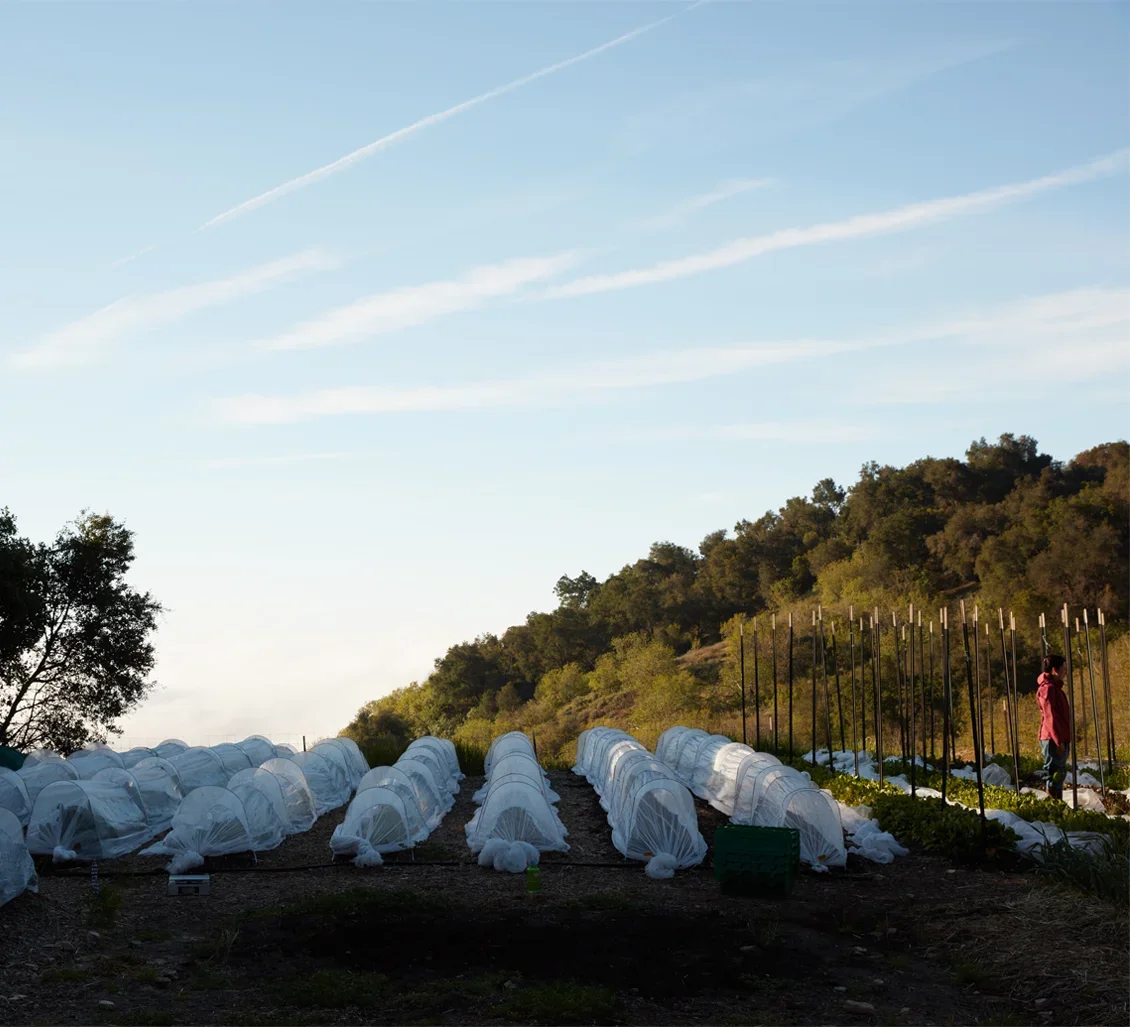
THE PRODUCTION GARDEN
Tony Yanow had had a sufficiency, as they say. After a day of tasting final dishes, he handed me his bowl. It was the Farmhouse Dumpling: made from butternut squash and potato; pillowy, gnocchi-like things served with whole vegetables, basil-pepita pesto, arugula, and a floof of pecorino from Santa Barbara County. I sat there eating out of the co-founder’s bowl, grateful for something solid before what turned out to be a whiskey tasting. They were days away from opening, and Tony was conferring with designer and photographer David Meredith on the last details.
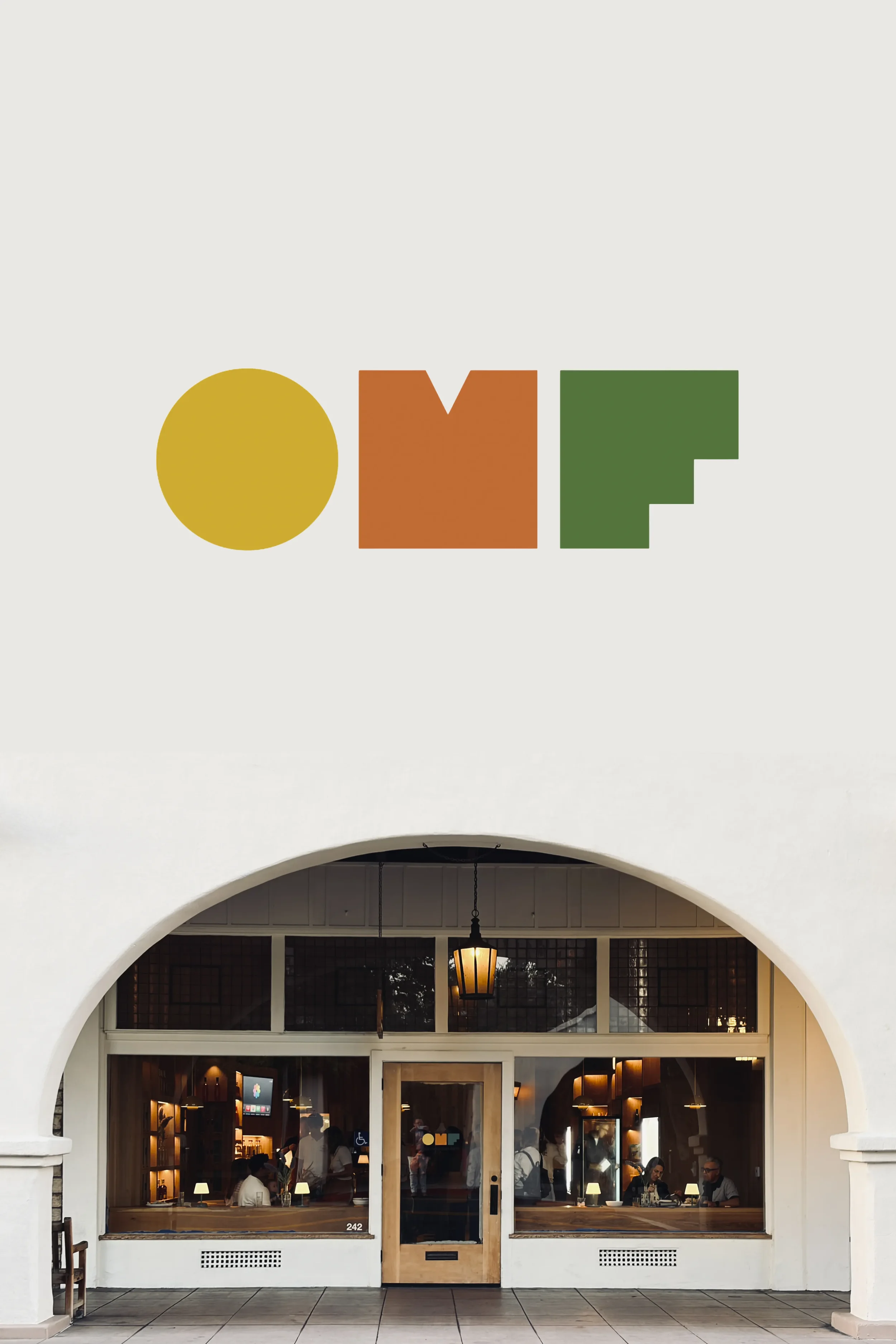
Ojai Mountain Farm (OMF) officially opens on April 10, where Osteria Monte Grappa used to be. For those of us who have been monitoring its progress with varying degrees of impatience, the wait is over. What the OMF team has made is something Ojai has needed and something Ojai was always going to make. This Valley has been growing its own long enough that “farm-to-table” is almost redundant.
The space is unrecognizable. All natural oak, built out by local woodworker Logan Gould; light, clean, and warm. Seating runs along the large front windows so you can watch the Arcade traffic go by. Two lounge chairs sit before a wall of oak lockers reserved for Whiskey Club members. The oak doesn’t stop. Shelves, walls, and ceiling. The room feels almost carved from a single thing: the bar and deli counter to the left, the market shelves to the right.
OMF is not a restaurant. There is no table service. Until the patio opens, there aren’t really tables. What there is, above all, is food. Really, genuinely, provably good food that comes, mostly, from a literal farm on a literal mountain.
Up the Mountain
The farm sits on Sulphur Mountain, high enough that your ears pop on the way up the unpromising road, high enough that it snowed once, and Co-founder and Farming Director Alex Hrivnak took pictures. She thought no one would believe her.
It was a chilly late March morning when I visited, and quiet. Alex walked me through the OG garden first, the original experimental plot tucked inside what used to be a sheep enclosure. This is where they try things, make mistakes, and learn what this particular land wants to give. They tried blueberries. They tried hibiscus. Neither worked. But potatoes, cabbage, kale, and shallots do extremely well here, even if the shallots might grow more slowly than expected.
We followed a path past the chicken coop to the first of five orchards. The property always had an orchard, but the Thomas Fire wiped out all but two trees and the infrastructure along with it. Solar panels, water tanks: melted. Alex, along with Rancher Extraordinaire Sergio Ortega and the crew, began rebuilding and replanting: stone fruits, citrus, and companion plants like lavender, sea buckthorn, and rosemary to lure pollinators.
The property is off-grid: solar, with a well and no pump. Irrigation is gravity-fed, which means the farmable land is finite and defined by what the water can reach. Of the 65 acres, only about four are currently under cultivation. The rest remain wild.
We climbed a hill, past exuberant Chihiro and Tomomi, two farm dogs who protect the place from mountain lions, coyotes, and bears. We passed baby chestnut trees that will someday dominate the southeastward view, up to a ridge spotted with wildflowers. The Valley opened up below us. On a clear day, you can see the Channel Islands, I’ve been told. Rain was coming, so they stayed hidden, but the view was still immense.
Alex has been up here five years now, officially since March 2021, but she’s been working in agriculture a long time. The day after graduating from the University of Delaware with a degree in Agriculture and Natural Resources, Alex flew West, landing first in California. She WOOFed on three Hawaiian islands and then at Apricot Lane Farms in Moorpark, the property made famous by the documentary The Biggest Little Farm. She became an apprentice, then a full-time employee, then poultry program manager, learning the ropes of an established operation. But she had never started a farm from scratch. Tony found her through a connection via Kiss the Ground, a nonprofit dedicated to regenerative agriculture. When he offered her Sulphur Mountain, it was a huge opportunity and, she’ll tell you, a little intimidating. She had never done anything like this. How many people have?
We walked back down through a citrus orchard, past Meyer lemons and orange trees pruned into lollipop shapes, to the new production garden, a larger field where most of what ends up downtown is grown. Every plant is protected by nets. No insecticides. OMF isn’t certified organic — the tagline is Uncertified, Uncompromised — but “everything is done as organically and sustainably as possible,” Alex told me. Most of what grows here ends up downtown: in the deli case, preserved in a jar, or in a bottle behind the bar.
In the Pack House
BRIANA CAMPOS
When I arrived at the pack house, one of the only things that survived Thomas, it smelled like sulfur and dill. The sulfur is from the well water. Sulphur Mountain is formed atop an ancient seabed, compressed over millions of years into Monterey shale. The smell comes with the territory. The team was doing what is called post-harvest: getting everything trimmed and prepped for transport down the mountain. Alex looked around at the progress — Vera on dill, Briana on carrots, Sarah on golden beets — and reflecting on the bounty of this year’s harvest marvelled, “Everything up here tastes like the best I’ve ever had.” Then she caught herself. “I might be biased.” Vera Smekalina, Orchard and Fertility Manager, added, “Everything is exploding this week,” she said. “Spring has spruunnng.” The energy in the pack house was high. That night, the OMF team would gather downtown for the first time in the finished space, a little party for the people who did the work.
Briana Campos, Garden Systems Manager and Cut Flower Specialist, explained the difference between farming for OMF and farming for a farmers’ market. “It’s more math than I thought,” she laughs. You have to know what the kitchen needs, when it needs it.
She did her undergraduate work at UC Davis, went on to study Environmental Studies at Boulder, WOOFed in Europe, and eventually also landed at Apricot Lane Farms. Briana and Alex were never there at the same time; just one of those coincidences. She had been in Ojai for several years, commuting all the way to Moorpark during her Apricot Lane era, and when the OMF position came up, it was perfect. She’ll celebrate her three-year anniversary in September.
Briana’s other domain is flowers. Expect bouquets in earth tones, with burnt orange and lime green for contrast; chocolate lace flowers, ranunculus, and snapdragons. She is also drying flowers for the off-season.
VERA SMEKALINA
Vera spent years in wine before going to graduate school for orchard management in Italy, with the explicit goal of getting out of wine. She found the OMF listing on GoodFoodJobs.com and, having been to Ojai once as a teenager for the Tennis Tournament, knew it was the kind of place where something like this might work. She accepted sight-unseen. Alex and Briana had reviewed other applicants, but “It was always Vera,” Briana said.
Five varieties of avocado grow on the property: Gem, Bacon, Haas, Fuerte, and Reed. They are, as Vera explained, gender-fluid little guys. Their flowers might open female in the morning, close, then reopen male in the afternoon, or vice versa. It sounds complicated, and it is, but her work has paid off. "We’re definitely going to get more fruit this year for sure,” she said. The cherries are another matter. They’re splitting. Vera has tried a calcium spray and gotten a weird fruit set. “The cherries,” she said, “are pissing me off.”
Downtown
A few days later, I was downtown for the first community soft opening. The room was full of familiar faces — Ojai Pub regulars, my hairstylist, an Ojai Studio Artist. General Manager Maddy Leffler was working the room with Courtney Russell (who has not yet been contained by a single title, so for now they’re going with Operations Glue). The farm crew was milling about, relaxed and joyful: Alex, Briana, Vera, and Sergio among them.
Jayson Holzworth, Culinary Director, came to OMF after nearly five years as Chef de Cuisine at the Ojai Valley Inn’s The Oak Restaurant, hired before there even was a kitchen. He’s been spending the last few years helping out wherever he was needed, including at one point assisting Sergio with building the berry trellis. He spent months before opening in the test kitchen, developing the ferments, planning the dishes, working out what the farm’s harvests could become. He was recommended to Tony by Tal Ronnen, one of the world’s most celebrated vegan chefs. Tony was looking for someone who was, in his words, “crazy passionate.” His test: What do you think about sauces and foams? Holzworth’s answer: If he’s eating a carrot, he wants to taste it. He wants it to be “the best fucking carrot in the world,” Tony told me. He got the job. He is joined in the kitchen by fellow Ojai Valley Inn alum Jonathan Pozos as Chef de Cuisine.
Their largely pescatarian menu for the evening was titled “Dinner Menu Ingredients”; every component of every dish, down to the water in the grissini. The team has decided not to support the industrial cattle industry, so the recipes are conceived entirely around that absence. This season, you’ll find springy dishes like Whitefish Papillote — that night the catch was halibut — with yellow squash, zucchini, and orange; the Honey Roasted Carrots came with chèvre and fennel gremolata; the Snap Peas with sheep yogurt mint sauce, radish, and pickled Sungold tomato. The Farmhouse Crudité was snap pea hummus and those house-made grissini.
My Endie Salad arrived first, spicy in a way I initially attributed to the dressing before I realized it was probably the radishes and arugula doing most of the work. It’s not the woody, bland, vacuum-sealed grocery store arugula; it just came out of the ground. The dressing is made from sheep yogurt and goat cheese, tangy and light (so thrilled to see the egg-cautious ethos carried over from Ojai Pub, Tony’s East End restaurant). The candied walnuts are made with aquafaba instead of egg whites, and the preserved Meyer lemon provides brightness that the beets and chickpeas absorb.
Then came the bread, soft and seedy: whole wheat flour, black beans, quinoa, and hemp seeds, a happy detour from the ubiquitous sourdough. Its spread is a compound herb mixture of goat butter, shallots, garlic, parsley, tarragon, thyme, lemon zest, orange zest, and salt. My husband, Nick, had ordered the Prawns and Polenta, which arrived as shrimp over a polenta cake made with goat milk and pecorino, with a pepper coulis and a ‘southern trinity’ of red bell pepper, celery, and onion, alongside broccolini. It was gone before I got to taste it. I didn’t even see it.
For my cocktail, I chose the Mulberry Mule — OMF mulberry and lemon-infused vodka with ginger and lime. Balanced, not too sweet, the ginger zingy but not overpowering, the mulberry holding its own.
Behind the Bar
Bar Manager and Beverage Director Nate McCullough also spent time up at the farm during the wait, doing, among other chores, Brixing fruit with Vera — tracking ripeness by sugar content. Apparently, your mouth tastes like metal after you’ve brixed enough citrus. “It’s a bonding experience,” Vera told me. It’s good to know that the person making the drinks knows the fruit the same way the person growing it does.
Rye whiskey was invented in America as a way to preserve excess harvest grain, converting something perishable into something that would keep and, over time, even improve. The OMF team realized those 18th-century farmers were onto something. One way the farm deals with its surplus yield is by making an astonishing variety of booze. There’s whiskey, of course, but also nectarine-loquat vodka, dry lemon and sweet orange aperitifs, apricot amaro, an orange and black licorice pastis, and a gin flavored almost entirely from what grows on the land, juniper the single exception; the one thing California won’t grow.
Nate had poured the whiskeys for me a week earlier, before the bottles had their full labels. The single malt came first, high-proof, and I braced myself for the kind of heat that announces itself, but it was incredibly smooth. The rye came next, spicy and essentially straight from the barrel. “I’m looking for the sweet spot,” Nate said of the proofing. More water could extend the batch. He won’t do it. The straight bourbon was last and my favorite: six years old, with a mash bill that delivers spice from the rye, sweetness from the corn, roundness from the barley and malt, and just enough wheat to pull it all together. Each year a whiskey ages, a small amount evaporates — “the angel’s share,” Tony tells me it’s called. The whiskey may get better every year, but every year there’s a little less of it. Ojai’s dramatic temperature swings keep the barrel’s oak very busy expanding and contracting, which accelerates the aging considerably. OMF batches are small, some of which produce fewer than 80 bottles, and they are sold only in Ojai.
The OMF cocktail list is inventive. A Beets Negroni uses OMF gin, beet shrub, and sweet vermouth. A Cucumber Gin puts bay leaf-infused OMF gin with fresh-juiced cucumber, celery, lime, and soda. An Avocado Old Fashioned uses avocado leaf-infused OMF whiskey, avocado seed orgeat, and bitters. The Strawberry Jam is OMF citrus vodka with rose hips, balsamic vinegar, and fresh lime, garnished with a dehydrated beet leaf. You can order a Coffee Martini made with OMF coffee liqueur. You cannot, Tony will tell you, order a Jack and Coke.
On the Shelves and All the Time
Nothing at OMF goes to waste. If it’s not cooked or distilled, it’s pickled, preserved, or fermented. Pickled root vegetable medley, pickled snap peas, napa kimchi, sauerkraut, and jams fill the market and serve as a record: here is what grew, here is what it became. “It’s a beautiful testament to how much we can produce and the farm’s potential,” said Vera. These live alongside tasty things from other farms, including Mama Tree, OMF’s upper Ojai neighbors, whose Meyer lemon shrub and walnut butter are on the shelves. Everything is from California, down to the handmade baskets.
Kari Hunt, OMF’s ECOS (Experience Curator, Operator, and Steward), oversees the market and has thought carefully about every item in it. Moving through the space, the logic reveals itself: raw produce and cold items up front, grains and dry goods, fat bottles of olive oil, a freezer full of popsicles ready to be carted across the street to Libbey Park, then whiskey, local honey, some beer and non-alcoholic beverages, and plenty of chips and snacky things.
The (fast) coffee was Chelsea’s idea. Tony’s partner wanted somewhere in town to grab a good cup in a hurry, and, like everything else, it’s thoughtfully sourced: a woman-owned, all-organic roaster out of Woodland Hills. Eventually, OMF hopes to add its own nut milks, and breakfast is coming once the team settles in. The deli bridges the gaps between meal services with sandwiches, salads, and skewers. Last Saturday, OMF opened its doors to the public for the first time. I had the beet salad, bright and citrusy, fragrant with dill. It may have been the same dill Vera was trimming up at the pack house — it’s been flourishing on the farm for months and shows no signs of stopping. Whatever time you wander in, there is something to eat.
Ojai has been doing this for a long time. Farmer and the Cook opened in Meiners Oaks in 2001 and helped design the template: grow the food, cook and/or sell the food, feed the community, with almost no distance between any of those steps. A new generation has picked it up — Ojai Roots, Field+Fort up in Carpinteria — and now there’s a version of it on Ojai Avenue. And it has a bar.
The farm-to-glass dimension is new here; spirits as preservation, a practical extension of orchard and garden. Grab something cold from the case on your way to a hike, or sit down with it and order an Avocado Old Fashioned.
While I was enjoying my beet salad at the bar, Tony talked Nick through the Whiskey Club. There are two levels: Valley and Mountain. The highest tier is designed to return double its value in whiskey alone, and also gets you one of the 34 oak lockers at the front of the house, a curated allocation of bottles through the year (whiskey, yes, but also other spirits), plus discounts on most of what’s in the shop. Tony made it sound reasonable. It kind of is, especially when you consider what it supports: a team of people who farm without waste, tend land with care, cook clean and beautiful food, and happen to make exceptional whiskey while they’re at it.
“It’s a small team,” Briana told me up at the farm, while Sarah stripped beet greens and Vera trimmed the dill. “You can really count the number of hands that touched the thing you’re eating. It’s amazing to watch it come to fruition,” she said, “and finally get to share it all.”
Ojai Mountain Farm opens April 10th at 242 E. Ojai Avenue. Friday through Sunday (to start), 11:30 AM to late evening. Eat in or carry out. No reservations. The Whiskey Club is now enrolling. The patio is coming soon.